ProdDev at Docker
At Docker, we’re not just maintaining tools. We’re actively redefining how developers build and ship software in the age of AI, from container infrastructure that powers billions of pulls a month, to MCP tooling that connects AI agents to the real world, to sandboxed execution environments that make agentic coding safe at scale. The problems are hard, the scale is real, and the impact is immediate.
If you want to work on something that matters, this is it. Engineer and Product work as one team, not in handoff. If you build products, this is how we do it
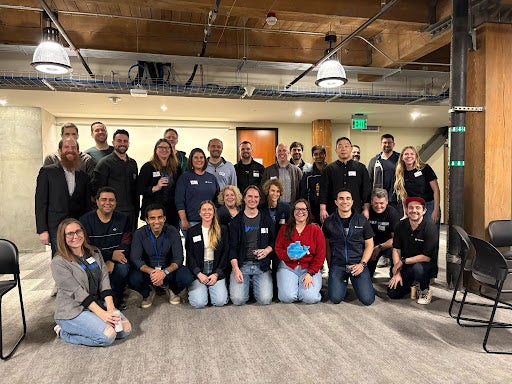

The Moment We’re In
Our product lines reflect where the industry is heading:
- Docker MCP Catalog & Toolkit — the standard for connecting AI agents to real-world tools
- Docker Model Runner — local-first LLM inference for developers
- Docker Sandboxes — isolated, secure execution environments for coding agents like Claude Code
- Docker Offload — breaking free from local compute constraints
- Docker Agent — Docker’s AI agent framework, built by our own Agents team, powering Gordon our AI Agent
We’re not chasing AI trends. We’re building the infrastructure layer underneath them.

“Working at Docker and having the flexibility of remote work while still being in a collaborative environment with coworkers around the world has been such an amazing experience!”
Mimi Pieper
Software Engineer III
How We Engineer
We run small, autonomous teams of 5–8 engineers, each led by an engineering manager. If you’re on a product delivery team, you’ll also work alongside a product manager and product designer. Every team owns a domain end-to-end, meaning you have real input into what gets built, how it gets built, and why.
Teams propose their own quarterly goals based on domain expertise and direct user feedback. Inspired by Team Topologies, we minimize cross-team dependencies so engineers can move fast without waiting on others.
Most teams are grouped within either North America or Europe to support real-time collaboration. We practice continuous improvement not as a buzzword, but as a standing agenda item. Our rituals: Sprint planning · Daily standups · Retrospectives · Full-company sprint demos (everyone ships, everyone shares)
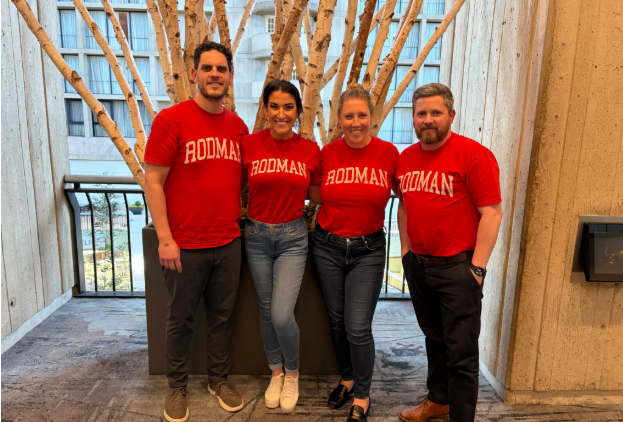

“At Docker, I’ve shipped across the full stack: from Docker Engine, a core primitive for millions of developers, to an open source Agent Framework that’s now embedded in Docker Desktop and shaping our next wave of products.”
Djordje Lukic
Principle Software Engineer
Our ProdDev Groups
- Bridge: A platform and enablement group covering identity, billing, data & growth, reliability, infrastructure, and internal AI developer tools.
- Agents: Builds Docker’s AI agent products, including Docker Agent & Gordon, the agentic platform, and AI agent initiatives.
- AI Tools & Models: Focuses on AI tooling at the intersection of artificial intelligence and security, including MCP.
- Cloud: Owns serverless and cloud sandbox infrastructure for running AI and containerized workloads in the cloud.
- Runtime: Develops and maintains the runtime environments (Agent Sandboxes) that power agentic workloads, with a focus on sandbox reliability.
- Security: Owns security strategy and execution across Docker’s product portfolio.
- Container Platform: Docker’s broadest engineering group, owning Docker Desktop, Docker Engine, Compose, Runtime, Virtualization, Supply Chain Security, Docker Offload, and the Build product line.
- Design: Responsible for product design, the Docker Design System, and design operations across ProdDev.
Our Tech Stack
- Languages: Go, TypeScript (React), C#, Swift
- Infrastructure: AWS, Helm, Terraform
- CI/CD: GitHub Actions, Jenkins
- Source Control: GitHub (open and closed source)
- Issue Tracking: GitHub, Jira, Notion
All code is reviewed by at least one engineer before it ships. Cross-team communities like the Front End Forum keep shared practices strong across the org.
Tech Debt & Innovation
We believe healthy engineering means making space for both. Engineers allocate roughly 20% of their time to tech debt reduction, prioritized by impact rather than age. And every quarter, we run company-wide hackathons dedicated to exploring, experimenting, and building things that might not fit neatly into a sprint.
On-Call and Work-Life Balance
For teams that require it, we design on-call rotations to be sustainable, not a source of burnout. Rotations are structured with clear ownership so everyone else can fully disengage, and engineers are compensated for their time on rotation. We’re committed to avoiding hero culture and single points of failure, and we continuously improve our alerts, runbooks, and tooling to reduce unnecessary noise over time.
We believe in flexible schedules, generous PTO, and supporting the full person, family, hobbies, and all.
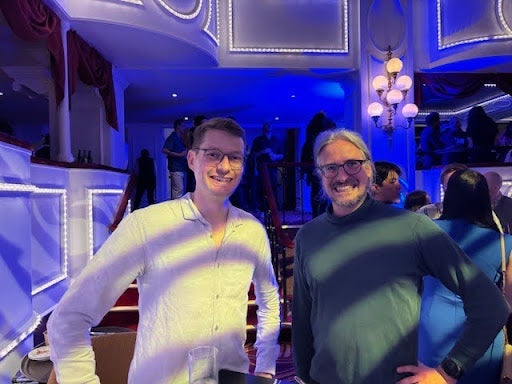

“The engineering team at Docker is great. Everyone works on products they use day to day, which leads to authentic discussions and innovation.”
Gurleen Sethi
Sr Software Engineer
The Engineering Interview
- Recruiter Screen (30 min) — Introduction, role overview, and background
- Hiring Manager Interview (60 min) — Your experience and goals, plus a basic technical assessment
- Technical Sessions (3 × 60 min) — Tailored to your level. All candidates complete a Technical Design session plus an additional session with the focus ranging from hands-on problem solving to execution and design, and in some cases, architecture, feedback, and engineering judgment.
- Group Lead, Director or VP Check (60 min) — A senior leadership conversation calibrated to your level
- Debrief — All interviewers meet shortly after your final session to make a decision. You won’t be left waiting.
A few things to know going in:
- Code in your own environment using whatever tools you’d normally reach for — no trick questions, no gotchas
- Online resources are fair game, just like they are in real work
- We want to understand how you think, not just what you know
- Interviewers are trained and selected to ensure a consistent, fair experience regardless of which team you’re joining
- Ask us questions, we’re evaluating fit in both directions
“Docker is hands down the best team I’ve ever been a part of. No egos, challenging problems, open collaboration, and a team that shares a level of passion and developer obsession you won’t find anywhere else. Management here really cares about my personal growth and my team challenges me daily to be a better person and engineer.”
Josh Newman
Principal Software Engineer
Join the Docker Team
The tools you build here will run inside the most critical infrastructure in the world. The team you’ll join is small enough to move fast and large enough to have real impact. And the moment we’re in — containerization meeting the AI era, is one of the most interesting in the history of developer tooling.